
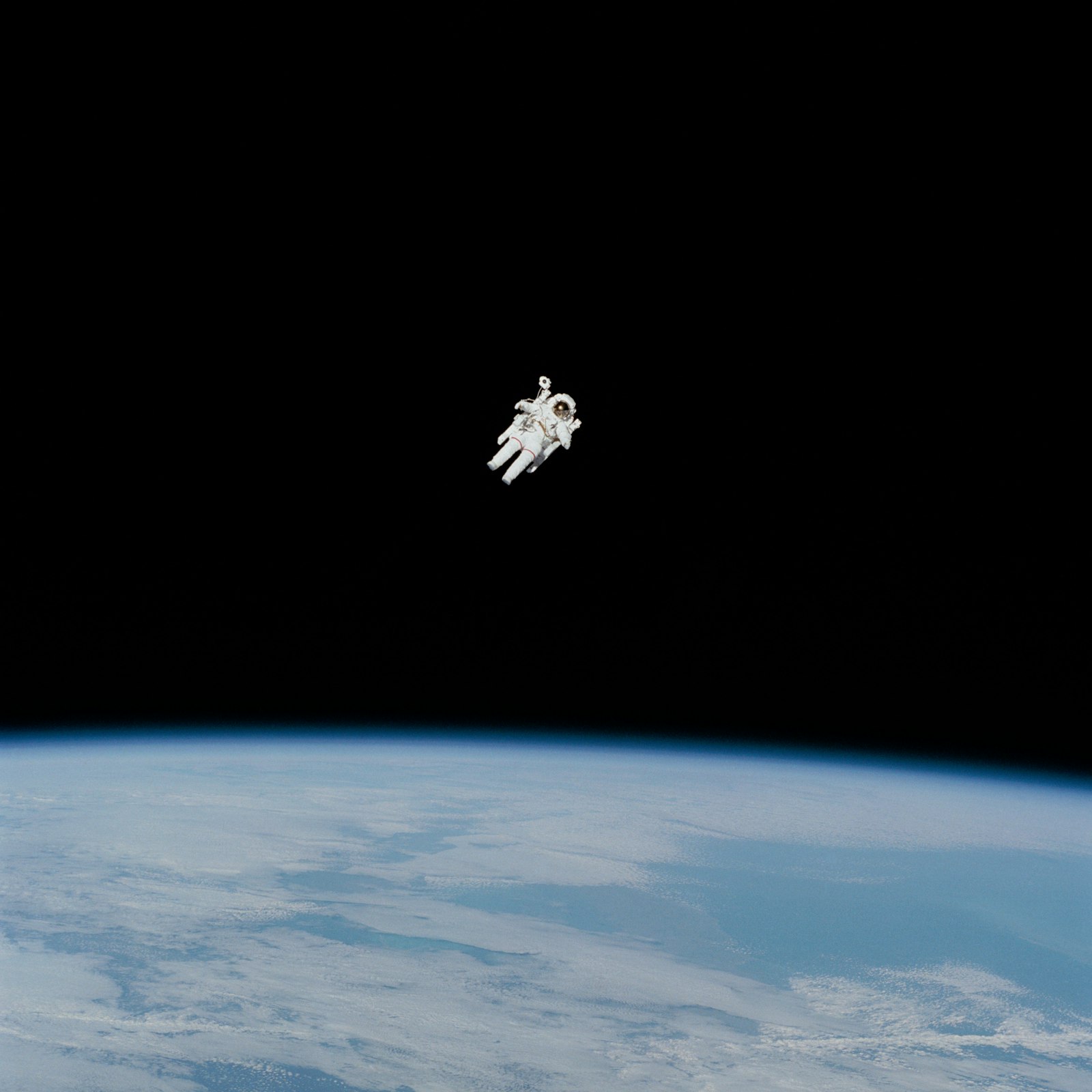
On April 6th, Artemis II astronauts woke up 65,000 miles from Earth, testing their spacesuits, waiting for tomorrow's lunar flyby. The media calls it a "historic moment" - true, but only half the story.
The other half is: how do we account for this?
One Flyby, Backed by Three Eras of Money
Since its official launch in 2017, the U.S. government has invested over $93 billion in the Artemis program to return to the Moon. This isn't a one-time expense but a fiscal project spanning decades - every launch, every ground station, every software iteration adds to the bill.
NASA's budget structure divides the Orion spacecraft, Space Launch System (SLS), and Lunar Gateway among different contractors: Lockheed Martin, Northrop Grumman, Boeing... Stock prices of companies on this value chain showed significant movements around the Artemis II launch.
SpaceX is another hidden thread. In the Artemis I mission, SpaceX received $2.9 billion as the lunar lander supplier; the critical step of Artemis III's crewed lunar landing will also be handled by SpaceX's Starship. One company holding NASA's two most critical cards was unimaginable a decade ago.
The Real Ledger of Lunar Economy
NASA released a report in 2023 estimating the potential value of lunar resources: helium-3 (controlled nuclear fusion fuel), rare earth elements, ice water (rocket propellant source) - surface estimates alone exceed trillions of dollars.
This isn't science fiction but real industrial logic:
The Real Signal from Artemis II
Artemis II won't land on the Moon. The 10-day mission's core objective is to verify three things: Orion spacecraft's life support systems, astronaut physiological data in deep space radiation environments, and the reliability of Earth-Moon communication links. Without these, Artemis III's crewed lunar landing cannot proceed.
So the Day 5 spacesuit test and tomorrow's 4,000-mile lunar flyby are essentially "insurance bought with money."
The astronaut roster for this mission includes NASA astronauts and a CSA astronaut from Canada. The multinational participation narrative is precisely how the U.S. leads space governance rules - not confrontation, but absorption. The Artemis Accords currently have over 40 signatory nations, while China's International Lunar Research Station project has about a dozen signatories. This competition for rule-making power is the real chess game.
What It Means for Investors
The space economy currently stands at about $469 billion. Morgan Stanley and Bank of America research reports both predict this figure will exceed $1.8 trillion by 2040.
Several sub-sectors deserve attention:
A Cold Reality Check
The Artemis program isn't without risks. The SLS rocket's single launch cost exceeds $4 billion, far above commercial rockets, and continues to overspend; under congressional budget pressure, the program timeline has been repeatedly delayed; SpaceX's crewed version of Starship hasn't completed certification yet.
This "return to the Moon" race is less a technology competition than a fiscal capacity competition. Whose treasury can sustain longer, whose supply chain is more complete, will control rule-making power.
And on April 6th, as the farthest human flyby in history occurs, capital markets are already pricing the next decade.
Artemis II astronauts are currently about 65,000 miles from Earth, about 4,000 miles from the Moon, with approximately 5 days remaining in the mission.