Back to Articles
Industry Insight 15 min read
Business Beyond the Flames: Chinese Opportunities and Pathways Amidst Chaos
April 2024 · Wang Xiaojian
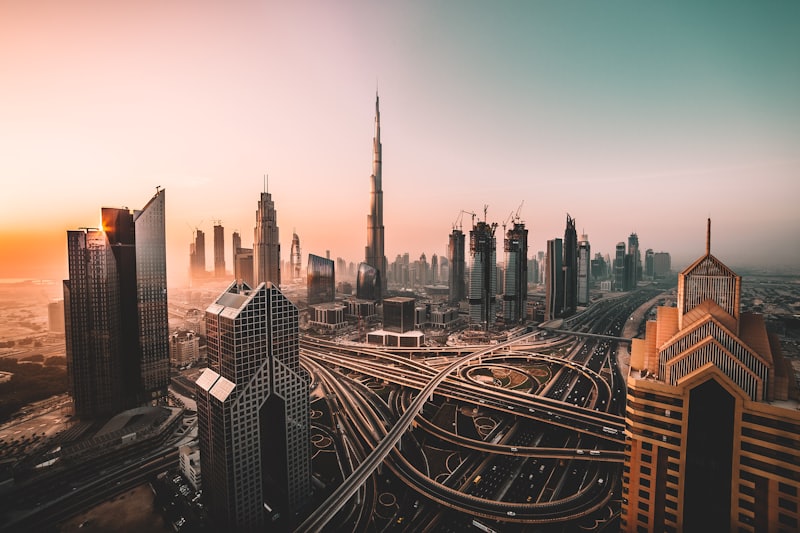
This meeting raised three layers of questions I've been contemplating.
## One Meeting, Three Logics
This Tuesday, I met with a senior official from the UAE government.
Their purpose was clear: finding infrastructure projects, engineering equipment, building material suppliers—anything usable for post-war reconstruction was on the list.
This conversation raised three layers of questions I've been considering:
1. How to enter and survive in the Middle East market?—This is outbound operations.
2. Who's directing this capital flow, and how can high-net-worth individuals position themselves?—This is asset logic.
3. Why does China have advantages in this, and what's the underlying principle?—This is cognitive elevation.
Three logics, interlocking, none dispensable.
---
## I. Overseas Operations: Entry Paths and Risk Boundaries in the Middle East Market
### How to Enter? Three Main Paths
**First: Government-to-Government "National Team" Channel.**
The China-Arab cooperation mechanism along the "Belt and Road," import-export buyer's credits, and preferential loans are the most mature capital paths. Backed by national credit, payment is guaranteed; suitable for patient, large-scale enterprises.
**Second: Finding Niche Opportunities Through Regional "Intermediaries."**
The UAE—especially Dubai and Abu Dhabi—is playing the role of capital aggregator and manager. Finding such intermediaries and entering through agents or joint venture models can bypass the barriers of directly entering high-risk zones.
**Third: Direct Engineering Contracting and Equipment Supply.**
Most direct for manufacturing enterprises—no need to advance funds as general contractor, just sell equipment, do subcontracting, with controllable risks. Prerequisites: your products have GCC/CE certification, after-sales networks, and local installation and commissioning support.
### Where Are the Risks?
**Political Risk:** Middle Eastern political landscapes can change at any time. Response: Don't bet on a single country, diversify to 2-3 markets; include force majeure clauses and exit mechanisms in contracts.
**Payment Risk:** Many countries have strict foreign exchange controls. Prioritize UAE, Saudi and other foreign-exchange-abundant markets; for Iraq, Syria and other reconstruction markets, try to use letters of credit or third-party escrow, don't easily do credit terms.
**Compliance Risk:** The Middle East's "relationship economy" is deeply rooted, but UAE and Saudi anti-corruption compliance (AML/CFT) is tightening in recent years. Establish internal compliance systems in advance, don't wait for problems to fix them.
---
## II. Asset Logic: Where Reconstruction Capital Flows, How High-Net-Worth Individuals Can Follow
### Where Does Money Come From, Where Does It Go
Behind Middle East reconstruction is multiple layers of sovereign wealth funds, government budgets, and international aid:
- Saudi PIF: Over $700 billion in scale, shifting from oil to diversification, increasing investment in infrastructure, new energy, and industrial manufacturing
- Abu Dhabi ADIA: One of the world's largest sovereign wealth funds, making strategic bets in the Middle East
- GCC sovereign fund cluster: Hundreds of billions in scale, systematically allocating to reconstruction industry chains
### Three Ways to Follow:
**Method One: Equity or Debt Participation in Reconstruction Industry Chain.**
Don't necessarily need to open factories in the Middle East yourself—by investing in Chinese enterprise equity participating in reconstruction industry chains—engineering contractors, heavy equipment suppliers, building material suppliers—indirectly capture the dividend. Choose enterprises with existing Middle East orders for higher certainty.
**Method Two: Allocate Counter-Cyclical Hard Assets.**
Middle Eastern sovereign funds are increasing investment in new energy, energy storage, and manufacturing parks. High-net-worth individuals with compliant channels can participate through FOF or special funds, diversifying risk while capturing regional growth beta.
**Method Three: Pay Attention to Information Gap Window Periods.**
Reconstruction business opportunities have obvious information asymmetry. Information gap windows are usually widest in early reconstruction stages—earlier entry means more bargaining power. High-net-worth individuals have the conditions to make forward-looking layouts rather than waiting for trends to mature before following.
---
## III. Cognitive Elevation: Why China, What's the Underlying Principle
### Stability Is the Prerequisite for Everything
China's greatest advantage accumulated over past decades is not some technological breakthrough, not some policy preference, but ultra-long-term political and social stability.
Stability brings three direct results:
**Scale Effect:** Chinese factories can operate 24 hours, workers can be continuously trained, supply chains can collaborate across regions—all built on the premise that "tomorrow will be about the same as today." Enterprises in turbulent countries cannot make five-year plans, let alone achieve scale effects.
**Replicability of Cost Advantage:** China's manufacturing cost advantage isn't just because of low wages, it's because the whole system is efficient. This system can be "moved out" with outbound enterprises and replicated in overseas reconstruction projects.
**Accumulation of Bargaining Power:** When the Middle East desperately needs a product and only a few countries worldwide can supply it stably, bargaining power shifts. China happens to occupy this position in most key materials.
### Generational Differences in Cognition
What's interesting is that different generations of decision-makers have vastly different understandings of "stability."
Entrepreneurs who grew up in the early reform and opening era personally experienced the cost of turmoil and know that peace and order are assets in themselves. The younger generation—growing up in peacetime—easily takes stability for granted, instead focusing more on growth, speed, and breakthroughs.
Truly high-level decision-makers can both see opportunities in chaotic times and clearly identify what underpins these opportunities—not luck, but the certainty accumulated over forty years.
---
## Conclusion: Opportunities at the Door, But Barriers Also Rising
Middle East reconstruction is a historic window, this is beyond doubt. But this window demands more from participants than ever before:
- Not just selling products, need to understand localized operations
- Not just finding orders, need to understand compliance and risk management
- Not just following trends, need to understand underlying principles
The more chaotic the outside world, the more clarity needed inside.
Steady yourself, see clearly, then set off.
---
*This article represents personal observations and reflections, and does not constitute investment or business advice.*
Wang Xiaojian
Asian investment expert, Chairman of Yaohan Investment. 25 years of financial experience covering China, Southeast Asia, Middle East, and Japan.