
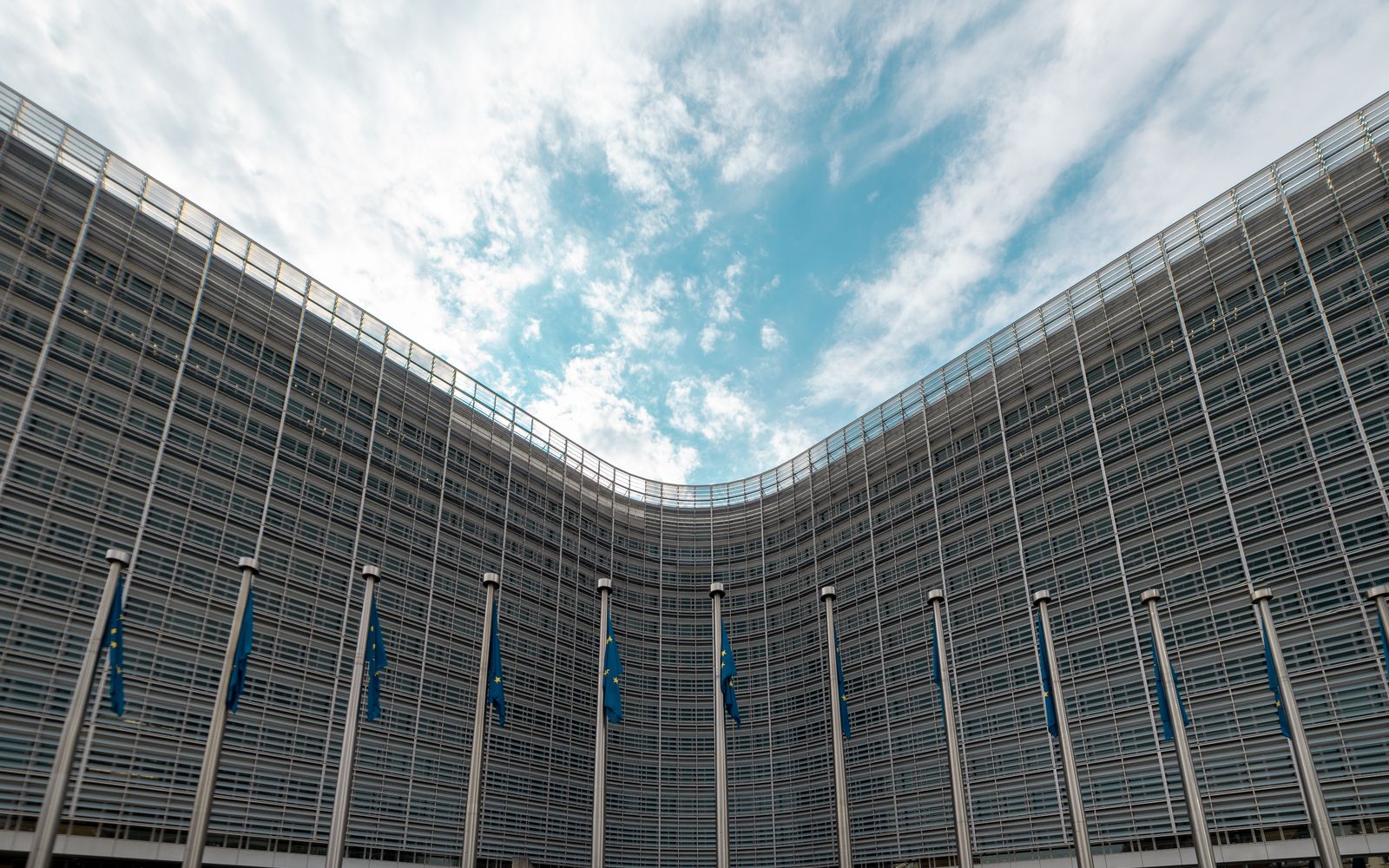
Europe's rhetoric toward China has grown steadily more bellicose. Public reports say the EU's countervailing duties on Chinese electric vehicles are now in force, stacked to over thirty percent at the top end, with trade-protection investigations into solar panels, wind power and steel following one after another. At first glance, Europe is brandishing the tariff stick and gearing up for a trade war with China. But look closer, and a continent that is bleeding its own industrial base hardly has the standing to fight China in manufacturing. Beneath this facade of toughness lies a body slowly losing blood.
1. Deindustrialization: From Forecast to Reality
Germany, Europe's "locomotive," tells the story best. Public reports say the German manufacturing PMI has lingered below the boom-bust line for a long time, with industrial orders and energy-intensive output sliding month after month. After the Russia-Ukraine conflict, Europe cut itself off from cheap Russian pipeline gas and turned instead to American LNG that costs noticeably more — lifting the very lifeblood of industry, energy costs, in one stroke. The result: chemical giants like BASF are pouring ten-billion-euro-scale capacity into Zhanjiang in China, while a batch of energy-hungry, high-value-added plants either relocate or shut down. When even a continent's basic industry is fleeing abroad, what does it have left to fight a trade war with China?
2. Science and Technology: Europe Is Mostly Absent From the Next Revolution
On the technology front, Europe's lag is even clearer. In the internet era, Europe never produced platform giants like Google or Amazon. In the age of AI, America holds OpenAI, Nvidia and Microsoft, while China has Huawei, a complete new-energy and power-battery supply chain, and a cluster of open-source players closing in fast on large models. What does Europe have to show for it? Its most credible AI company, Mistral, is valued — by public reports — more than an order of magnitude below OpenAI. Europe, of course, is not without assets: ASML in lithography, Airbus in aviation, Novartis and Roche in pharma. But that is precisely the problem — it holds a few good cards yet cannot assemble a complete technology and industrial system. A handful of bright spots cannot change the absence of an entire supply chain.
3. High Welfare, High Taxes: Eating Away at Europe's Competitiveness
Europe's third dilemma is that the welfare system the whole world once envied is becoming a shackle. High welfare means high taxes and high labor costs; add decades of population aging, and welfare spending grows ever more rigid while the number of workers shrinks and the number of recipients grows. This system is not worthless — it bought a generation's dignity — but the price is that the economy's vitality is drained away layer by layer. The cost of hiring, building and expanding in Europe is plain for all to see. This structural expensiveness is both a deep cause of deindustrialization and the short board Europe cannot overcome when competing with an efficiency-driven manufacturing system like China's.
4. The Root Goes Back to the Marshall Plan: Seventy Years of Penetration and Proxy Interests
These three dilemmas are not separate ailments; they point to the same root. After World War II, the Marshall Plan transfused Europe with blood — ostensibly reconstruction, but in substance the opening of seventy years of American economic and political penetration. The dollar settlement system, NATO's military umbrella, and a large bloc of interest proxies cultivated over decades by America inside European politics, media and think tanks have together hollowed out Europe's strategic autonomy. How deep does the penetration run? Public reports say European Commission President Ursula von der Leyen's husband and children all hold American nationality, and behind the operations of many European political groups and governments, American institutions have long been bankrolling the bill. With the people tied to America and the money supplied by America, how can Europe's decision-makers be expected to speak for Europe? These proxies' interests are bound to America, not to Europe — which is why they could push Europe, after the Russia-Ukraine conflict, to cut off cheap Russian pipeline gas and buy costlier American LNG; why they could push Europe to fill its arsenals with American weapons; and why they stayed silent when America's Inflation Reduction Act siphoned away European manufacturing with subsidies. Public reports show European politicians chanting "strategic autonomy" year after year, only to grow more dependent on America with each passing year. Penetration bought not independence but a continent hollowed out by the combined interests of proxies and America. Seventy years on, its capacity is still fading and its vitality long drained — leaving it, on today's great-power chessboard, as nothing more than fish on the chopping block.
5. A Threat With No Trump Cards Can Only Kill Eight Hundred and Wound Ten Thousand
Back to the trade-war threat we opened with. Europe's tariffs on Chinese EVs look like protection for domestic industry, but in reality Europe's own auto industry is precisely the most vocal opponent — which of Germany's carmakers and component giants is not deeply tied to the Chinese market and supply chain? The tariffs hurt, first of all, Europe's own green transition and its consumers, and second, push Europe's auto industry into an even more passive corner. With no industrial base, no technological trump cards and no independent energy, wielding a tool like tariffs that wounds the enemy a little and oneself twice over is not a game — it is self-mutilation. In plain words: kill eight hundred of theirs, and wound ten thousand of your own.
6. For Chinese Companies, Europe Is Turning From a Rival Into a Market
When it comes to Chinese companies going global, the ledger actually needs to be read more carefully. Europe will not disappear, and neither will its market or its demand — it is simply changing identity. A continent that has lost its industrial and technological competitiveness will ultimately degenerate into everyone's holiday destination, tourist spot and marketplace for products. It can still hold on to a few respectable things — luxury goods, a slice of industrial technology — where it remains competitive in individual niches. But as a whole, it no longer qualifies to sit at the same table competing with China and America.
What is more dangerous is the internal drain. Europe's own people have finished living their comfortable lives, and behind them flood a large wave of immigrants and illegal immigrants who hunger for the same comfort — two forces stacking up to wear away the continent's last vitality. The market is still there, and so is demand, but the skeleton that holds up this market and its demand has already gone soft.
So for Chinese companies, this is precisely the moment to treat Europe as a market rather than a rival. Don't be frightened by the tariff stick in front of you — Europe's industrial ebb tide leaves behind real consumer demand, distribution channels and room for brands to land. Whoever holds complete industry, technology and energy security will be the one to steadily catch this market as it changes hands.
⚠️ Disclaimer: This article reflects personal views and does not constitute investment advice.