
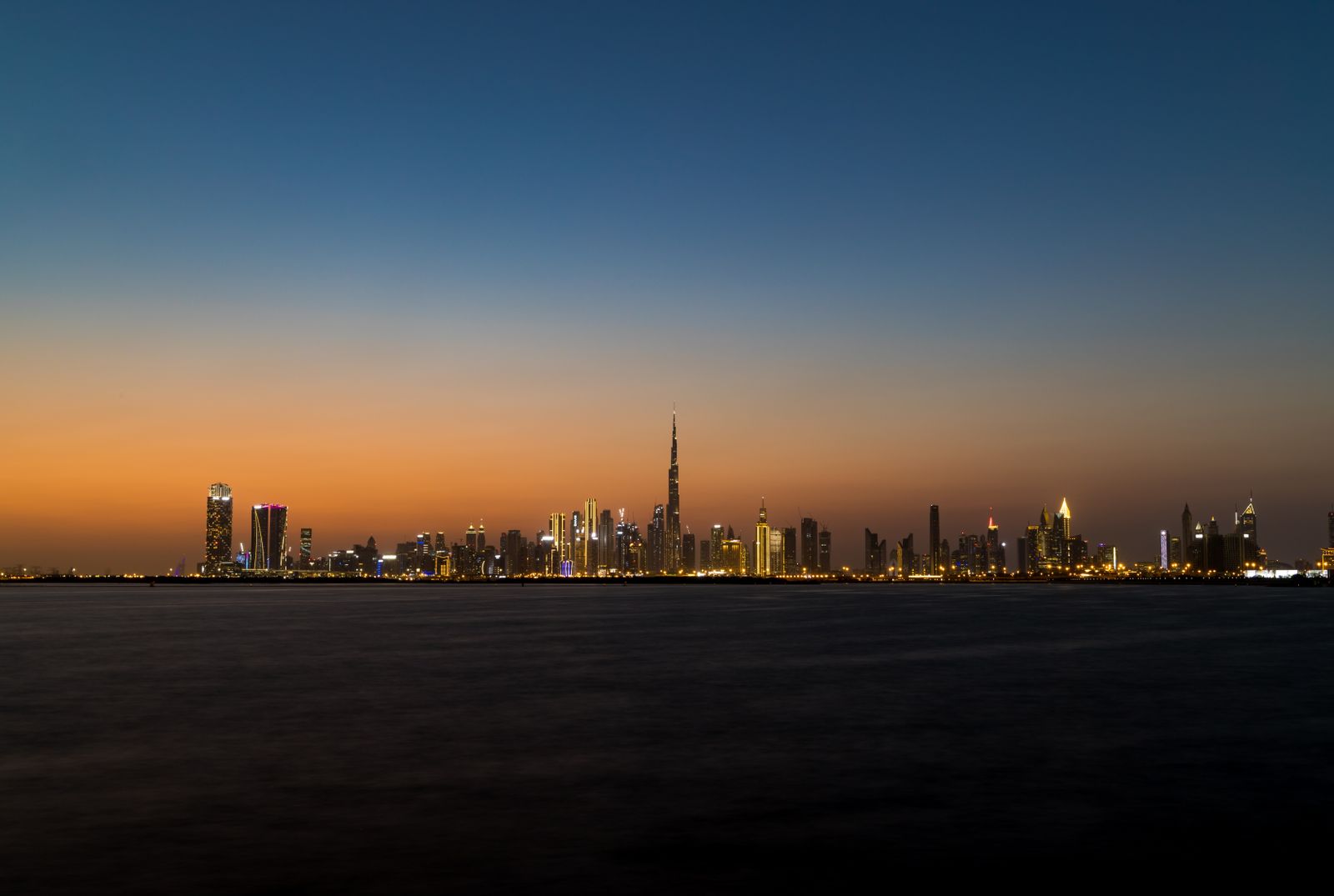
In the same week, two cities on the Gulf staged two completely opposite stories.
In Riyadh, King Khalid International Airport was hit twice in a row. Public reports say the strike on the 10th killed more than ten people and wounded over three hundred — Saudi Arabia's deadliest attack in more than a decade — and a second round on the 11th added more casualties. The Houthis openly named two Saudi Aramco facilities among their targets and warned airlines and travellers worldwide to stay away from Saudi airports and airspace.
A few hundred kilometres away in Dubai, the picture was the opposite. The Dubai International Financial Centre (DIFC) just handed in its first-half report card, almost too good to be true: active registered companies passed ten thousand, with organic growth of thirty percent over the past twelve months; the densest cluster of hedge funds in the Middle East sits right here; and it climbed to seventh on the Global Financial Centres Index.
One side is paying an ever-higher price for its security environment, while the other quietly books companies and capital while everyone else is at war. That is where the Gulf's twin powers stand right now.
1. Saudi Arabia's security bill is becoming its investment bill
What Saudi Arabia has wanted most these years is to turn itself from "a country that sells oil" into "a place that attracts global capital". Vision 2030, full opening of its capital market to foreign investors, Riyadh Season, and the Future Investment Initiative — a whole combination of moves aimed at "inviting global capital and leaders in".
But every one of these moves rests on a single precondition: security.
Right now, Saudi Arabia is being dragged down by a war it keeps sinking deeper into. Public reports say that since the latest escalation on September 3, Saudi airstrikes on Yemen have exceeded two thousand; the Houthis' answer is to use ballistic missiles and drones to hit precisely the "showpiece" targets — airports and energy facilities. What they are attacking is your very channel for "inviting people in".
The security environment is the first line foreign capital looks at. Public reports say Saudi Arabia's foreign direct investment fell 18% quarter-on-quarter in the second quarter, to 22.3 billion riyals — the impact of the US-Iran war on international investor sentiment is now out in the open.
So Saudi Arabia's problem right now is not a lack of money, nor a reluctance to open up — it is that a war keeps bidding up its security premium. When the airport is being struck and the airspace warned off, even the biggest exhibitions and the most open policies get discounted. The murkiness of its investment outlook has its roots right here.
2. What the UAE is doing: quitting the cartel, pumping more, counting companies
Look across the Gulf and the UAE's moves, almost every one of them, is built on two words: security and stability.
In May this year, the UAE quit OPEC and OPEC+. As the cartel's third-largest producer, its stated reason was that it did not want to be "bound by any organisation" on output. Public reports say that after leaving, its daily crude production could rise from 3.4 million barrels to 5 million. Better still, its eastern port of Fujairah sits outside the blockaded Strait of Hormuz — while other producers fret over shipping through the Red Sea chokepoint, the UAE can quietly ship oil out of its east-coast port and pocket the wartime premium.
On the financial side, the numbers are even harder. That DIFC mentioned above: over ten thousand active registered companies and thirty percent organic growth, 1,134 regulated financial firms, family offices up 36% in a year, and foundations up 67%. Hedge funds — the densest in the whole Middle East.
Put plainly, the UAE has turned "security and stability" into a business and taken it to the extreme. While others are at war, it is building the hub, managing the money, running the headquarters economy.
3. What the rivalry is really about: one sells growth, the other sells stability
On the surface, this Saudi-UAE contest is a fight for the title of "financial and business centre of the Middle East". Underneath, it is a race between two models.
Saudi Arabia bets on a big market plus policy dividends: a two-trillion-dollar Vision agenda, a five-fold rise in foreign investment inflows, a fully opened capital market, and a regional-headquarters programme. What it sells is "growth".
The UAE bets on a mature business environment and institutional stability: more than forty free zones, 100% foreign ownership in most sectors, the local-sponsor requirement scrapped even in Dubai, clear taxes and a mature headquarters economy. What it sells is "stability".
In peacetime the two models can still trade blows, each with its own clientele. But the moment the region slides into war, the scale tips visibly toward "stability". War is an amplifier of the stability premium, and a speed bump for the growth story.
Capital is already voting with its feet. Public reports say that in China's accumulated investment stock in the Middle East, the UAE ranks first at over nine billion dollars, with Saudi Arabia behind; and the UAE's non-oil economy, at 78% of GDP, is also higher than Saudi Arabia's.
So the judgement here is not "Saudi Arabia is going to collapse", but "during this wartime window, the UAE's relative advantage will keep getting magnified". In the Saudi-UAE rivalry, the odds of the UAE coming out ahead are rising.
4. How Chinese companies going global should run this math
For anyone doing cross-border business, this shift is an account that has to be re-tallied.
Saudi Arabia: big market, dense policy dividends, but it is a "growth story inside a wartime environment". Its airports, energy facilities and airspace are all off the safety list for now; before you set up a regional headquarters, exhibit, or land a project there, you first have to weigh that security premium.
The UAE is a "stability story inside a secure environment". It is already the first stop for Chinese companies entering the Middle East, with mature free zones, taxes and headquarters economy; the longer the war drags on, the more its position as the hub keeps getting reconfirmed.
But the conclusion is not either-or. Saudi Arabia is volume; the UAE is certainty. The smarter play is to treat the UAE as your Middle East bridgehead and cash-management hub, and to treat Saudi Arabia as a "growth option to be exercised once the dust settles" — enter through the UAE while the war is on, and expand into Saudi Arabia once things stabilise.
This is exactly the deepest lesson I have taken from my years going into the Middle East: it is not one market but a whole chessboard of different games; and what decides which square you bet heavily on is not how big that square is, but whether you can, in a secure environment, build your business to last.
So in this rivalry between the Gulf's twin powers, the short term is about the war, and the long term is about who runs the "security" business more professionally. For now, the answer leans toward the UAE.
⚠️ Disclaimer: This article reflects personal views and does not constitute investment advice.