As a child watching God of Gamblers, the words "Swiss bank cashier's cheque" meant wealth, secrecy and safety. A few days ago, public reports said UBS is drawing up plans to move its headquarters out of Switzerland — acquire a US institution, merge with a European peer, or simply sell out. The "absolute safety" of the movies is, in reality, packing its bags.
1. The bottom of small-state finance is regulatory arbitrage
The rise of centres like Switzerland, the Cayman Islands, Luxembourg, Singapore and Dubai is usually put down to permanent neutrality and sound rule of law. All true — but not the core. The core is regulatory arbitrage: small states can write their own tax law, regulation and disclosure rules, using low taxes, light regulation and secrecy to take on what big-country capital would rather not keep at home — tax optimisation, asset isolation, political-risk hedging.
So their financial technology is not necessarily better than New York or London's; what they sell is institutional services the big powers cannot conveniently offer. When the times give you a window, you have a business; when they close it, you find a new position.
2. The window is closing
Two forces are tightening. One is tax coordination: FATCA plus CRS turned "secrecy" from a selling point into a risk — public reports say Swiss finance's partial edge is exhausted. The other is unstable rules: in the Credit Suisse resolution, AT1 bonds were written down to zero while shareholders still got paid, and a special emergency ordinance let UBS buy Credit Suisse without a shareholder vote. When the law fell short, they wrote a new one on the spot.
The most expensive infrastructure of a financial centre was never the buildings, but "predictable rules". When repayment order can be rearranged on the spot and a law written for a single deal, the wealthy ask only one thing: could it be my turn next?
Beyond rules, there is geopolitics. When Iranian missiles fell, Dubai lost roughly $120 billion in market value in short order, capital fled, and a saying went around: "When Dubai stumbles, Hong Kong eats its fill." Europe's old centres, meanwhile, are squeezed by US regulation and the dollar system — UBS's capital requirement runs half again as high as its European and American peers, and its shares have lagged rivals by about 27%.
Here lies the fundamental awkwardness of small-state finance: no big home market to fall back on, yet carrying tail risk for global capital. Without safety, everything else is off the table.
3. Hong Kong's reversal: selling "verifiable safety", not "secrets"
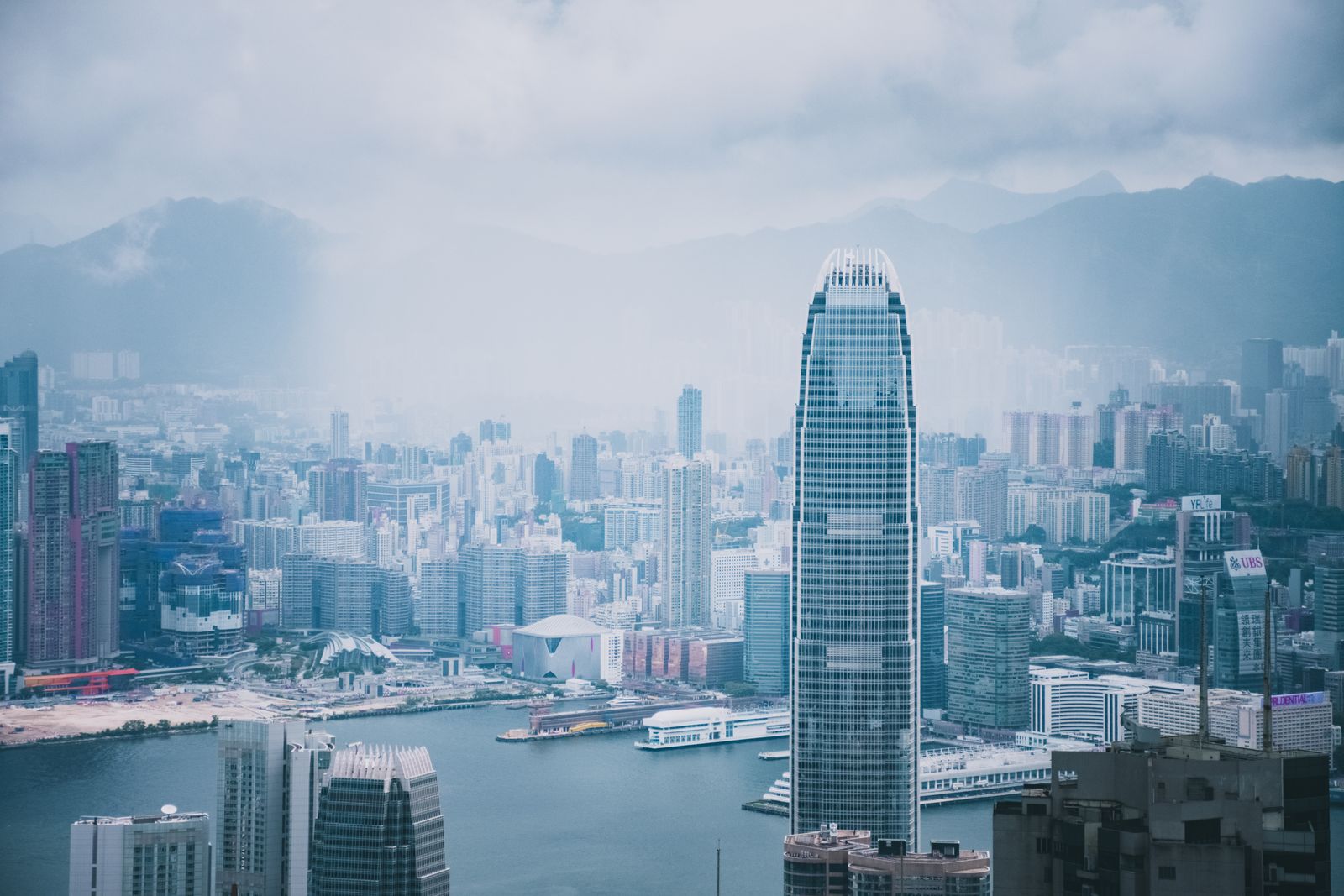
BCG's Global Wealth Report 2026 shows Hong Kong overtook Switzerland for the first time in 2025 to become the world's largest cross-border wealth management centre. A shift of scale on the surface, a paradigm shift underneath.
The old question when picking a centre was "can you hide it for me?"; the new one is "is there a real economy behind you, are your rules predictable, and who backs you under pressure?" Hong Kong answers on three counts: backed by China, with living water — the mainland real economy and offshore renminbi give it an industrial depth neither Switzerland nor the Cayman Islands has; compliant yet open — transparency drives out "dirty money" and keeps "smart money"; and an eastward-hedging security position.
In one sentence: old centres sell "secrets"; new centres sell "verifiable safety + growable connections".
4. Landing back on our own business
The arbitrage-dividend era of small-state finance is over; an adaptation period follows. Switzerland is stuck in a "too big to fail → higher capital demands → weaker competitiveness" knot, Dubai's safety premium can vanish any day, and Europe is contracting. Hong Kong needs only to hold its position as "China's window" — without drifting, vanity or self-offshoring — and its space will be wider than in the last decade.
For those of us in cross-border business, the landing point is concrete: we used to park capital and structures in "secretive, low-tax" small centres; now the question is whether the node has a real economy behind it and a big country to back it. A declining rival is not a vanishing market — demand remains, only the role shifts from "a centre that hides your money" to "a node that connects you to the market". Capital flows to whoever has clear rules and someone standing behind them. That is Hong Kong's opportunity, and the window for us to help Chinese companies put their capital and business in the right place.
⚠️ Disclaimer: This article reflects personal views and does not constitute investment advice.